Where to See Pelicans and Birds on Skadar Lake
Skadar Lake is one of Europe's premier birdwatching destinations. More than 280 species have been recorded here, including the rare Dalmatian pelican, one of the largest freshwater birds on the continent. Whether you are a serious birder or simply hoping to spot something remarkable, this guide covers what to look for, when to go, and where on the lake your chances are highest.
Dalmatian pelican
The Dalmatian pelican is the star of Skadar Lake. This heavy, graceful bird, weighing over 10 kg with a wingspan exceeding three metres, is red-listed and breeds at only a handful of sites in Europe. Montenegro's population has recovered significantly, with several hundred birds now using the lake.
Pelicans are year-round residents but not equally visible in every season. They are most active and easiest to spot from April through June (breeding and feeding season) and again in September through October (migration period). In high summer (July–August), heat pushes birds to remote, shaded parts of the lake and they are harder to approach.
Look for pelicans on open water near fishing areas, in the Morača delta, and around the wider lake surface near Karuč. They fish cooperatively, herding fish into shallows, a behaviour worth watching through binoculars.
Cormorants on the lake
Two cormorant species are common on Skadar Lake: the great cormorant and the pygmy cormorant, the latter being particularly associated with this wetland and listed as near-threatened globally.
Great cormorants form large winter colonies, sometimes hundreds of birds, from December through February, perched on dead trees and rocks drying their wings. Pygmy cormorants are smaller, more elusive, and often seen in reed beds and quieter channels.
The Crnojevića River channels between Rijeka Crnojevića and the open lake are reliable pygmy cormorant habitat. A slow boat ride through these channels often yields sightings without disturbing the birds.
Herons, kingfishers, and other species
Grey herons and purple herons stalk the reed edges throughout the lake. Squacco herons and night herons appear in spring and early autumn. These birds are common along the river route and near Karuč village.
Kingfishers flash electric blue along the canyon and channel sections, a highlight for photographers with a telephoto lens. Glossy ibis, white storks, and various duck species add to the diversity, especially during spring and autumn migration.
Birdwatchers should bring binoculars (8×42 is ideal) and a camera with at least 200mm reach. The lake rewards patience and a quiet approach. Loud boats and close approaches scatter birds quickly.
Best time of day for birdwatching
Early morning, between 6:00 and 8:00 AM, is the single most important factor for birdwatching success on Skadar Lake. At dawn, the water is glassy calm, birds are actively feeding, and light is ideal for photography.
Late afternoon (roughly 5:00–7:00 PM) is the second-best window, especially for pelicans returning to roosting areas. Midday, particularly in summer, is the worst time: heat rises, birds retreat to shade, and harsh overhead light ruins photos.
If your schedule only allows a daytime tour, ask for the earliest available departure. The difference in wildlife activity between 7 AM and 11 AM is dramatic.
Best season for birdwatching
April through June offers the best overall combination: breeding activity, migrating species, water lilies in bloom (late May to mid-July), and comfortable temperatures. Pelican sightings are most reliable in this window.
September and October bring a second peak as migratory birds pass through and pelicans feed actively before winter. The light is softer and crowds are thinner than summer.
Winter (November–March) has its own appeal, large cormorant colonies and moody landscapes, but fewer tour operators run and some restaurants close. Summer remains worthwhile but set expectations lower for close pelican encounters.
Best areas on the lake
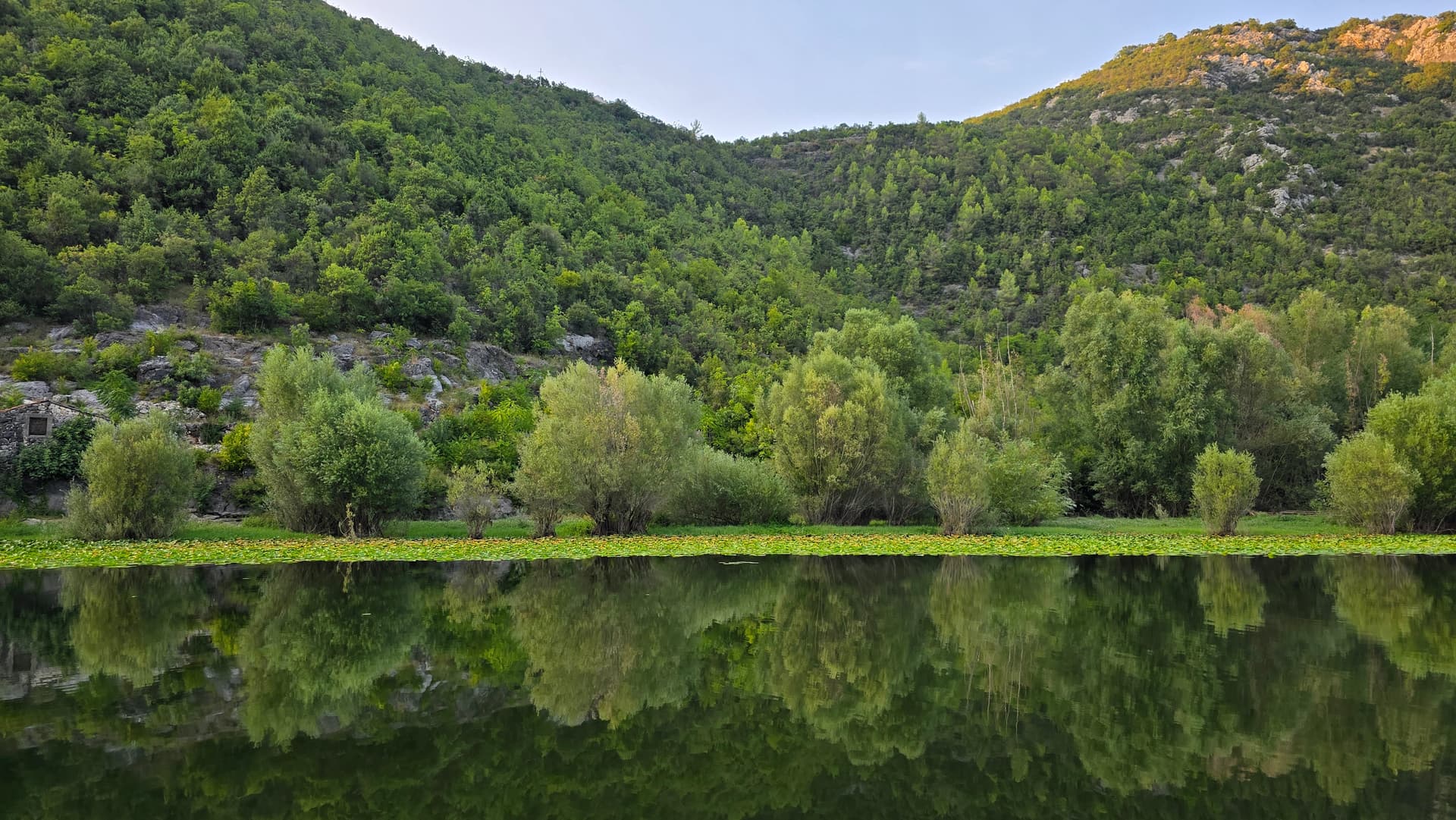
The Crnojevića River channels from Rijeka Crnojevića: kingfishers, pygmy cormorants, herons, and water-lily habitat. Best accessed by boat from the river starting point.
Open lake near Karuč: pelicans, great cormorants, and the deepest clear water. The village itself attracts fishing birds.
Morača delta and northern lake: important for pelicans and wetland species, though less visited on standard tourist routes.
A private boat tour with a local captain who knows current bird locations will consistently outperform a fixed group itinerary. Birds move with season, water level, and feeding patterns.

When guests want to photograph wildlife, Vasilije often slows down or briefly stops the boat whenever it's safe to do so, giving everyone time to enjoy the moment. For month-by-month species highlights, see the Skadar Lake birdwatching calendar. For Amazon versus complete-route picks, see the Best Skadar Lake Tours guide.
Related Guides
Frequently Asked Questions
Quick answers to common questions about this topic.
Can you see pelicans on Skadar Lake?
Yes. Dalmatian pelicans are year-round residents, with best sightings from April–June and September–October. Early morning boat tours offer the highest chance of close encounters. Summer sightings are possible but less frequent.
What birds are on Skadar Lake?
Over 280 species including Dalmatian pelican, pygmy cormorant, great cormorant, grey heron, purple heron, kingfisher, glossy ibis, and various ducks, eagles, and storks. It is one of Europe's richest wetland bird habitats.
What is the best time to see pelicans on Skadar Lake?
Early morning (6–8 AM) in April–June or September–October. Pelicans feed actively at dawn. Avoid midday in summer when birds retreat to shaded, remote areas.
Where is the best birdwatching on Skadar Lake?
The Crnojevića River channels (kingfishers, cormorants, herons), open water near Karuč (pelicans), and the Morača delta (wetland species). Boat access from Rijeka Crnojevića covers the most productive channel habitat.
Do you need binoculars for birdwatching on Skadar Lake?
Binoculars (8×42 recommended) significantly improve the experience, especially for pelicans and smaller species like kingfishers. A camera with 200mm+ zoom helps for photography. Some birds approach closely on quiet boat tours.
Is there a birdwatching boat tour on Skadar Lake?
Most standard boat tours pass through prime bird habitat, especially the Amazon channels route. For best results, book a private early-morning tour and tell your captain you want to focus on wildlife. They will slow down and stop at known feeding areas.
Which Skadar Lake tour is best for narrow channels and wildlife?
The Amazon Tour (€85, 1h) or Complete Tour (€120, 1h 40min) from Rijeka Crnojevića with Boat Cruising Vasilije. Both spend time in the lily-and-willow channels where birdlife is densest; early morning improves pelican and heron sightings.
Ready to Explore Skadar Lake?
Private boat tours from Rijeka Crnojevića for up to 8 guests, flexible routes, swimming included, and a local captain who knows every corner of the lake.
Book a Private Boat Tour